
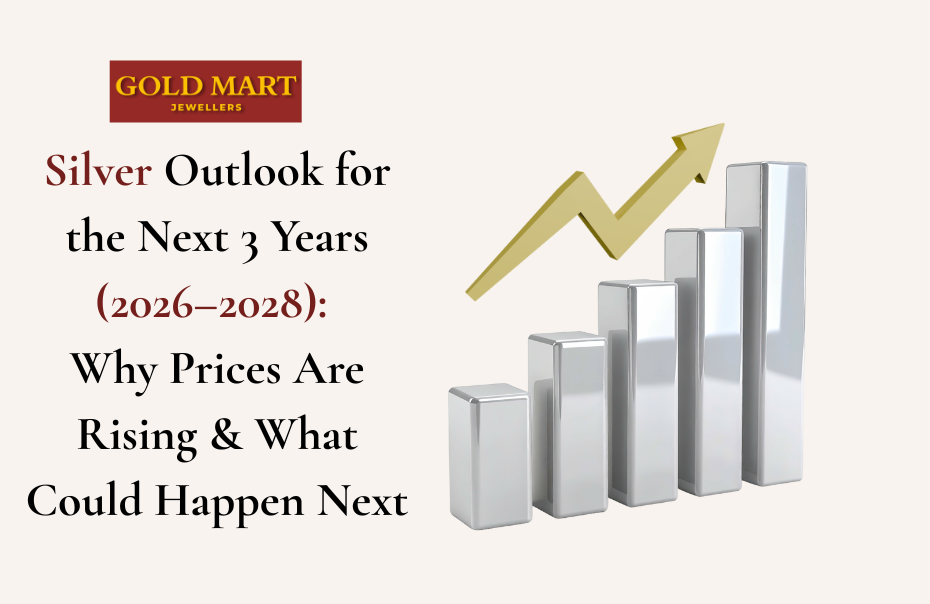
The silver price outlook 2026 is shaped by rising industrial demand, especially from solar energy, electric vehicles, and electrification, along with tight global supply. Looking ahead to 2026–2028, silver is expected to remain volatile but well supported because it acts as both a precious metal and an industrial input.
Silver Price Outlook 2026: Market Overview
Silver has moved beyond its traditional role as a store of value. Today, it plays a growing part in clean energy, electronics, and modern manufacturing. This shift has strengthened long-term demand while supply growth remains slow. As a result, price movements have become sharper and more sensitive to global news.
Analysts tracking industrial metals highlight that the silver price outlook 2026 is closely linked to solar expansion, electrification trends, and limited mining output.
What’s Driving Silver Prices Right Now?
Silver prices are rising mainly due to a long-term demand shift combined with constrained supply.
Key Market Tailwinds
- Strong industrial demand from the green economy, especially solar power and electrification
- Several years of market deficits where demand has exceeded supply
- Broader economic factors such as interest-rate expectations, inflation concerns, and geopolitical risk
Because silver is a smaller and more volatile market than gold, it often shows sharper price moves when these factors change.
Why Are Silver Prices Rising in 2026?
Solar PV Growth Supports Industrial Demand
Solar energy remains one of the largest sources of silver demand. Even though manufacturers try to reduce the amount of silver used per panel, global solar installations continue to grow. This keeps total silver consumption high.
According to global energy agencies, solar power is expected to account for a large share of new renewable capacity in the coming years. This creates a stable base of demand that is less affected by short-term market swings.
What this means: Solar demand helps keep silver prices supported even during market slowdowns.
Supply Growth Remains Limited
Silver supply is difficult to increase quickly. Most silver is produced as a by-product of mining other metals such as zinc, lead, and copper. Because of this, higher silver prices do not automatically lead to higher production.
When demand rises faster than supply, prices tend to react sharply.
What this means: Limited supply makes silver more sensitive to demand surprises.
Ongoing Deficits and Tight Inventories
Market data over recent years shows repeated supply deficits. In simple terms, total demand has often been higher than total supply. This tight balance supports prices and increases the impact of any supply disruption.
Investor Demand and the Gold Connection
Silver also benefits from its link to gold. When investors buy precious metals due to rate cuts, currency weakness, or global uncertainty, silver often follows gold’s direction. However, silver usually moves faster, both upward and downward.
Silver Price Outlook 2026–2028: Three Possible Scenarios
Base Case: High Prices with Sharp Swings
In the most likely scenario, industrial demand stays firm while supply grows slowly. Prices remain supported but volatile.
What to watch:
- Pace of solar expansion and technology improvements
- Whether supply deficits continue or narrow
- Interest-rate trends and US dollar movement
Expectation: An upward bias with periodic corrections of 10–25%.
Bull Case: Supply Shocks and Strong Investment Demand
This scenario could play out if supply chains tighten due to policy changes, export restrictions, or logistics issues. Continued investor interest would add further pressure.
Expectation: New price highs are possible, but sudden pullbacks remain a risk.
Bear Case: Demand Slows and Prices Correct
If industrial demand weakens more than expected or economic conditions turn risk-off, silver prices could correct sharply.
Expectation: A meaningful decline is possible, though long-term industrial use may still limit downside compared to earlier decades.
Near-Term vs Medium-Term Outlook
2026: A Year of Volatility
- Markets react to interest-rate changes and economic growth
- Silver may show larger swings than gold due to higher volatility
2027–2028: Industrial Demand Takes the Lead
- Continued growth in solar and electrification supports demand
- Mining supply responds slowly, keeping the market tight
Silver Price Outlook 2026 in India
For Indian buyers, silver prices are influenced by several local factors:
- Global silver prices in US dollars
- USD/INR exchange rate
- Local premiums, taxes, and charges
- Festival-driven and investment demand
Because of this, silver prices in India can remain firm even when global prices pause.
Final Thoughts on Silver Price Outlook 2026
Overall, the silver price outlook 2026 points to elevated prices with sharp volatility. Long-term industrial demand and limited supply continue to support the market, while short-term movements may remain unpredictable.
This article is for educational purposes only and does not constitute investment advice. Silver prices can be highly volatile.


I was able to find good info from your blog posts.